


Whale: a tale on sweeping dust
Trigger warning: rape and sexual assault
Upon the third or so page, I wanted to return Whale by Cheon Myeong Kwan because the author talked about titties. Usually, I don't mind reading about breasts but written by a male author? Yeah, I don't know about that, to be honest. Regardless, I carried on reading because honestly I just finished All The Pretty Horses by Cormac McCarthy and was solely disappointed, although impressed by the prose and dialogue, and, as readers, if we don't have a book under our belt, was the trip to the library worth it? ( I say as if it isn't, but let me be melodramatic). Thus, I carried on reading and thank God I didn't stop because this book transcends the confines of a novel and becomes a tale. This is very hard to do.
“Anyone can unwittingly find themselves preposterously deluded or irrationally obsessed at least once in their lives.”

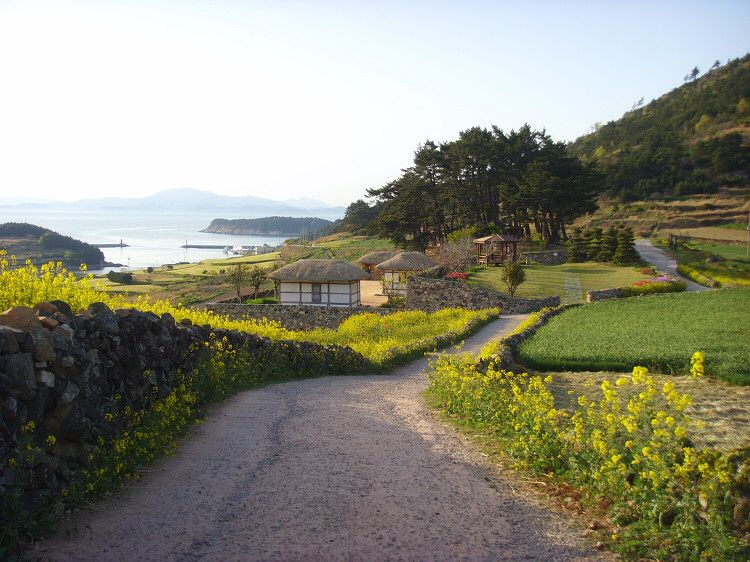
Whale remains a fever-like, satirical insight, a grabbing and gaping open of a squirming mouth, of the human condition, intertwined with the supernatural, séances, and large pepes. It creates the world of Geumbok, Chuhui, Mun, Jumbo not through rich poetry like sentences. Nor from astounding metaphors and similes. Nor from the deep interiority of characters. And yet, we feel the empty heat of the Korean countryside, then the grinding sound of trains and the innocence of Chunhui and Geumbok's master wit. As readers, we inhabit this world. I know that sounds strange as this book is set within Korean history and so is very much a reflection of people's lived experiences. But this world, as alike in other books, isn't simply the politics, but an aliveness to the characters that we aren't just told to believe or given reasons to prove. Geumbok's wit and acumen in making money and growing isn't so she can be the most powerful in Pyeongdae, or to put pressure on politics, or even a deep seated anger and trauma wound. Instead, she goes from a successful dried fish business as a teen, to a café to transportation to a brickyard to a theatre to whatever else because, bluntly stated, she doesn't like small things. If one is there to consume the fruit of life, consume it all. Chunhui doesn't speak because of an inherent shyness or a physical disability, but rather because the world spins slowly in her minds’ axis, her sensory depository is chock full to the point where she can sense grains of rice. Her only friend is former-circus elephant, Jumbo, who watches the world equally as slow.
My point here is that Myeong-Kwan births a sense of aliveness in his characters through an absurdity in their interactions with the world, thus making themselves and the world absurd. Or perhaps the more true phrasing would be reveals the absurdity within humans and the world. Myeon-Kwan does this successfully and not in an obviously grating and obnoxious way because of his background as a screenwriter. Through this, I felt myself become fond of both the world and Myeon-Kwan as an omniscient, jovial yet grim narrator, and by extension us as the omniscient, jovial yet grim readers. In my opinion, this specific dynamic through this specific craft is hard to do.
“Maybe this whole story is a single tale of revenge—who really knows? Did the old crone succeed in getting her revenge? Nobody can answer that; those who remember her curse are no longer of this world. Her story begins long, long ago, when the train first came to Pyeongdae.”
As an anthropologist, Whale is a little gem-studded bottle found on a beach. Usually books that speak to me talk in depth about politics or a niche issue or simply builds upon the intellectual knowledge of something I already have. However, with Whale, it just…reveals the human condition. And at its core; it’s sex, migration, greed, jealousy, labour, and sometimes it’s just navigating the philosophical journey towards change and death, wrapped in feelings of yearning, melancholy and nostalgia and marked by violence, sadness and brutality. Whale reminds me that sometimes life is silly, sometimes violent, and sometimes movement that goes beyond you. I sit back and think, “..huh.” What I will say though is that I appreciate the how the story touches on the voiceless, both giving, for instance Chunhui, interiority and feelings and depth to her desires and relationships and her place in the world as a woman, artisan, the odd-one-out, and how the voiceless are treated in academia and entertainment. By the end of it, you think, “have I done that..?” and also, “am I doing that right now?”, with Myeong-Kwan’s narrative. This just brings you closer to the characters and, what I feel like, a peeling of the rust and muck to reveal the simple pearl underneath.
One last thing I will touch on is the rape and sexual assault. For instance, Geumbok moves with a fishmonger as a teen, who is implied to have a sexual ‘relationship,’ with, Geumbok’s father was aroused by her, she at one points akins sex to paying for a transaction, she has sex a lot – in the wild, in the brickyard, in the theatre, in her home, and at one point, is even raped during a thunderstorm, which traumatises Chunhui. It’s impossible to look over and forget and to be honest at one point, I did question if it was ethically right for a man to be writing about the women characters being…used and using like that. But upon finishing the book, I can conclude this: the women characters are entangled with men beneath them, sometimes above them, and sex is sometimes both power but also fun and also just a meaningless way to pass both time and bodies. At one point, Chunhui even compares sex to what animals do. From this, Myeong-Kwan highlights the multiplicity of bodies and intention and feelings, and similarly the multiplicity of patriarchal relationships between men and women. Furthermore, I think utilising a female translator, Chi-Young Kim, attests to this exploration of the gendered experience of both life and the other. At one point, Myeong-Kwan even points to this directly through Geumbok, a firm, promiscuous and powerful businesswoman, who, upon meeting and paying out a beautiful prostitute, transitions into a man. He becomes a jealous, sleazy, violent alcoholic, whose own female lover runs away to be with another man. It feels like gender and bodies, who move like animals under human disguises, are intertwined throughout the whole novel.
I’m still turning this over in my mouth, so who knows, this opinion might change and that’s the best part about finishing a book.
What was the experience of working with Cheon Myeong-kwan like? How closely did you work together? Was it a very collaborative process? Were there any surprising moments during your collaboration, or joyful moments, or challenges?
This was the first book I’ve ever translated where I didn’t reach out to the author during the process. I literally had zero questions for him! It’s funny how Mr. Cheon says he wrote the book as if someone were dictating it to him, because translating it was a similar experience. Something about the narrative and the tone and the characters felt so familiar to me. I was reminded of my grandmother, who told me all kinds of folk tales and stories when I was young, as well as the Korean books I loved growing up. It felt comfortable, like home.

Comments